Shipyard
Live
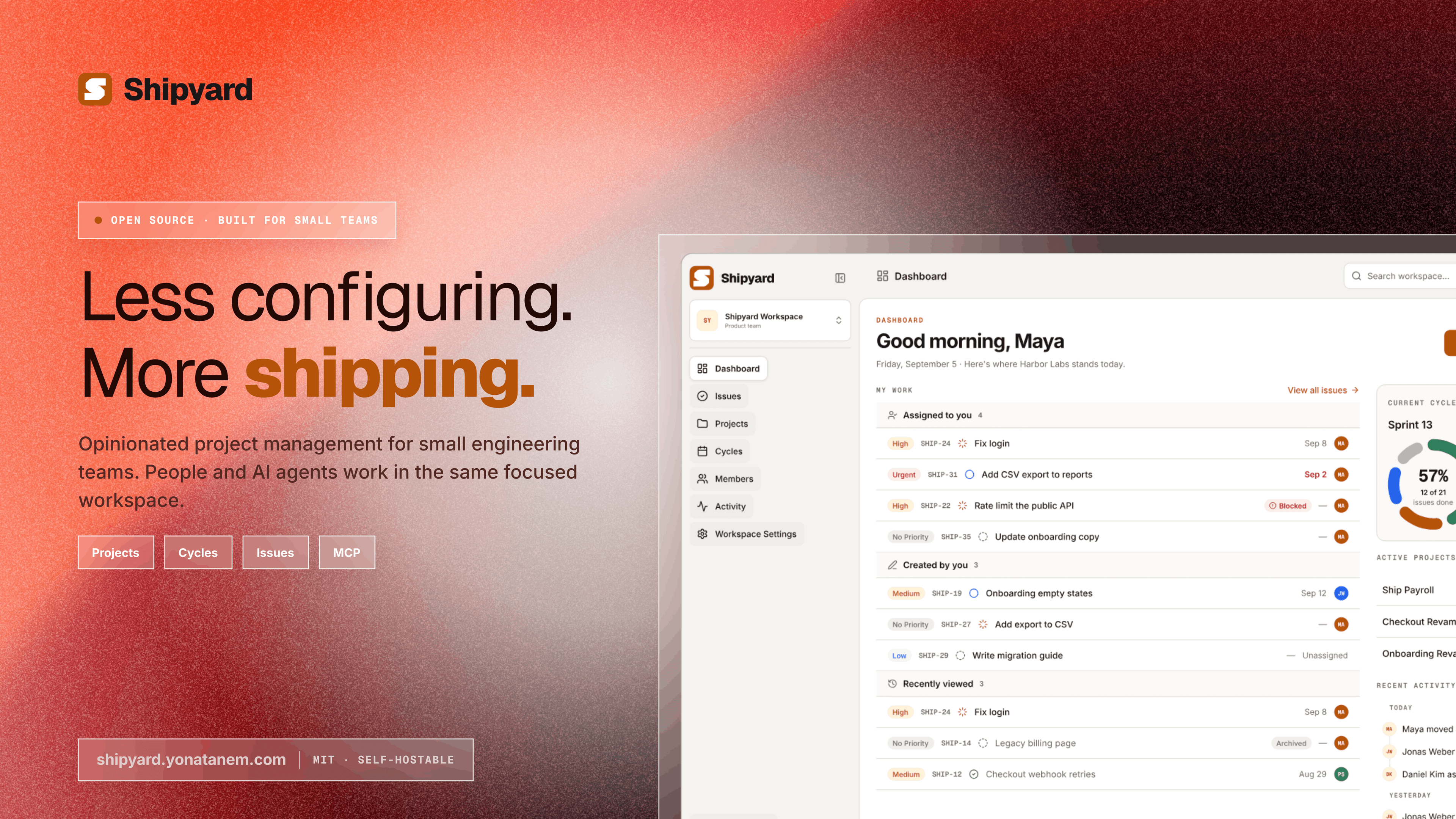
Projectmanagementforsmallengineeringteams
Opinionatedopen-sourceworkspacewherepeopleandAIagentsplan,track,andshipworkinthesamefocusedflow.
The problem
Small software teams spend their weeks managing their project management tool instead of building software. The market splits two unhelpful ways: tools too simple to run a real engineering workflow, and enterprise platforms where configuration becomes somebody's part-time job.
Shipyard starts from a narrower bet: teams of 2–30 people don't need more features. They need the essential workflows (issues, projects, time-boxed cycles, visibility) done fast, with excellent defaults instead of configuration screens.
What it is
Shipyard is an open-source, developer-first project management workspace. Plan. Build. Ship. The promise is deliberately plain: the easiest way for small software teams to manage and ship software.
It is live in production at shipyard.yonatanem.com, and the source is open at github.com/YONATANEMEKETE/shipyard.
How it works
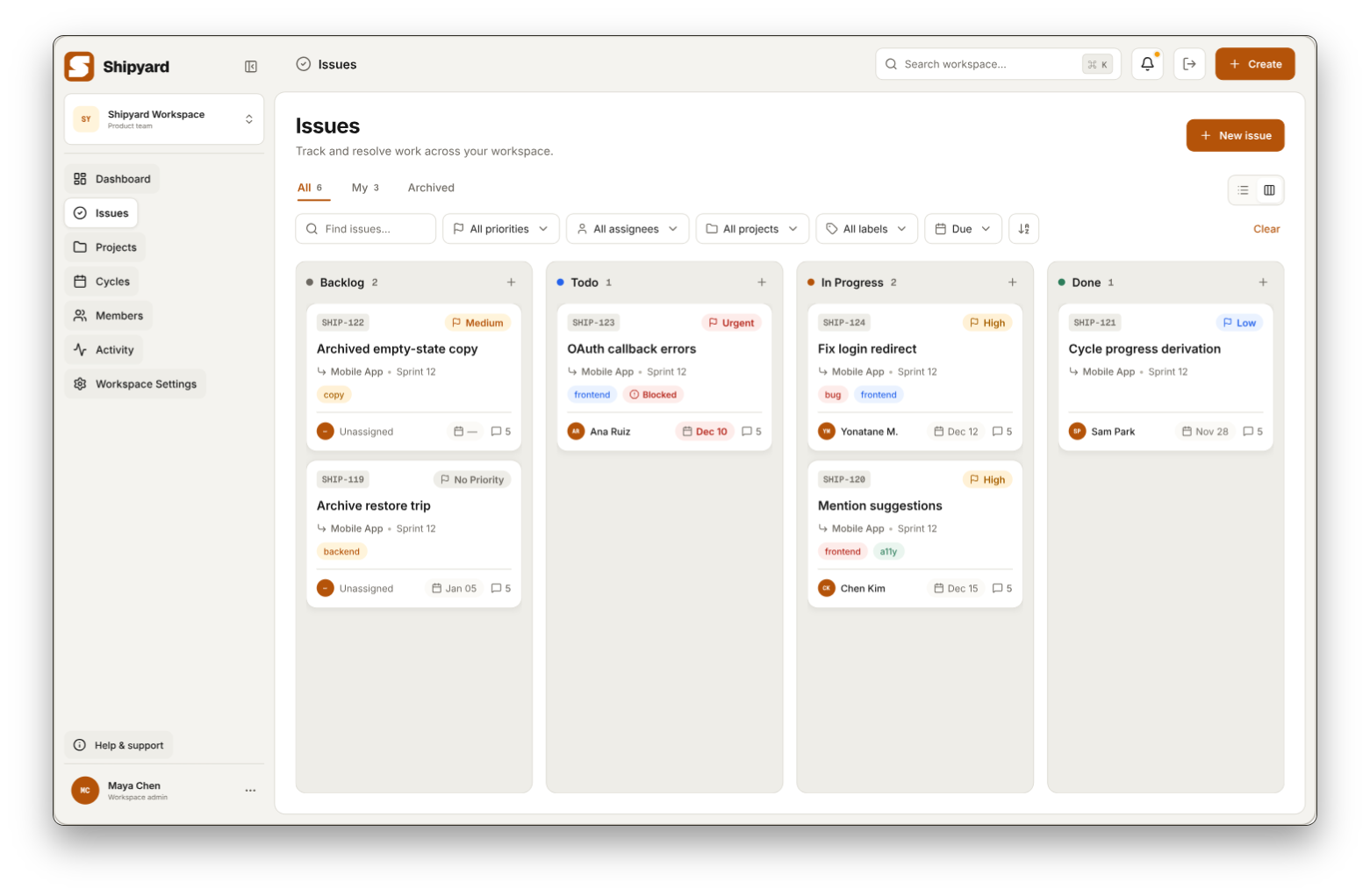
Work lives in issues with workspace-scoped keys (SHIP-482), tracked on a board or a list, with priorities, labels, assignees, due dates, and blockers that carry a reason.
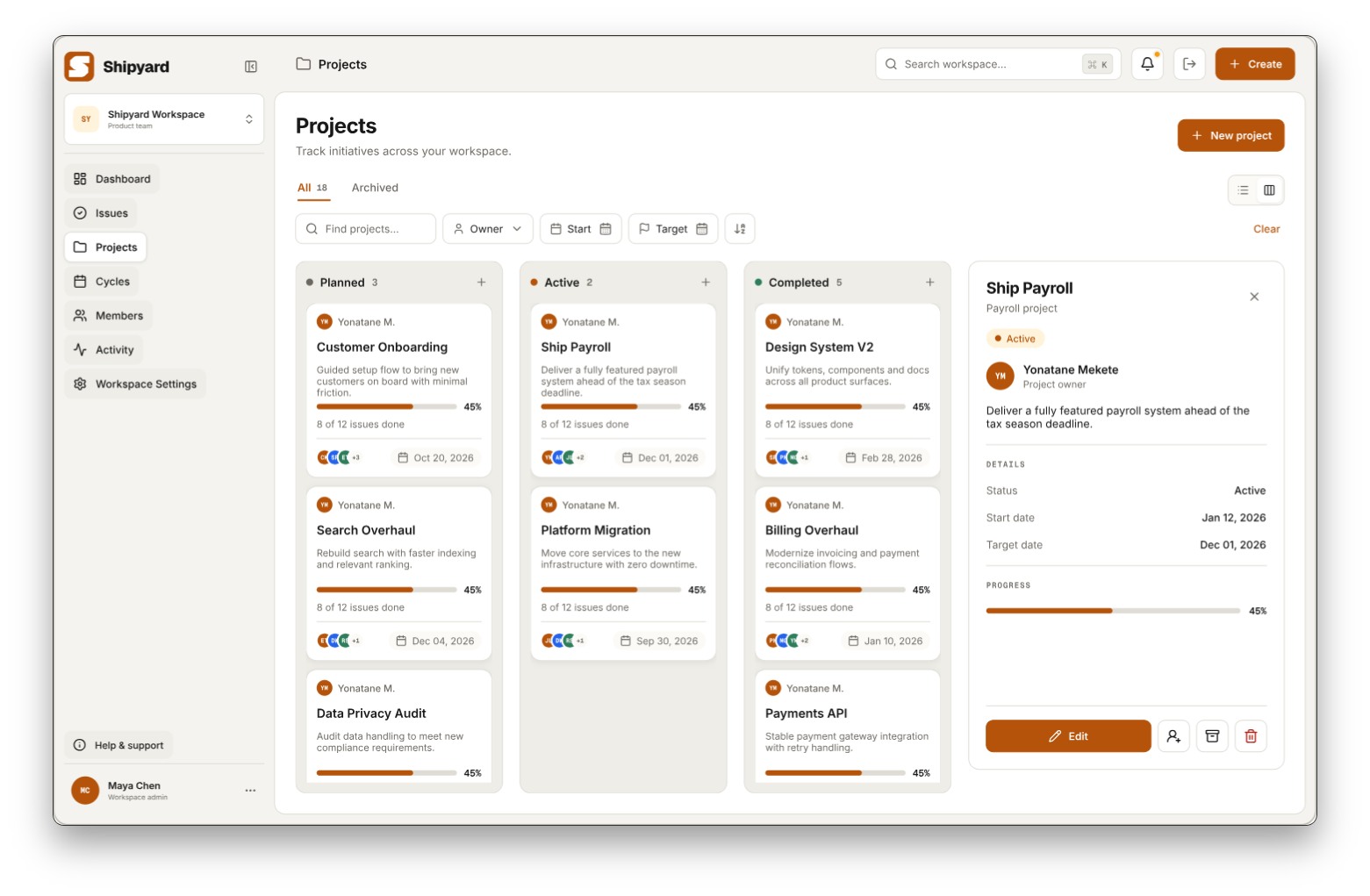
Issues roll up into projects (Planned / Active / Completed) and cycles (non-overlapping, one active at a time), and progress is never stored anywhere. It is derived from the issues inside, so planning, doing, and reporting always read from the same data.
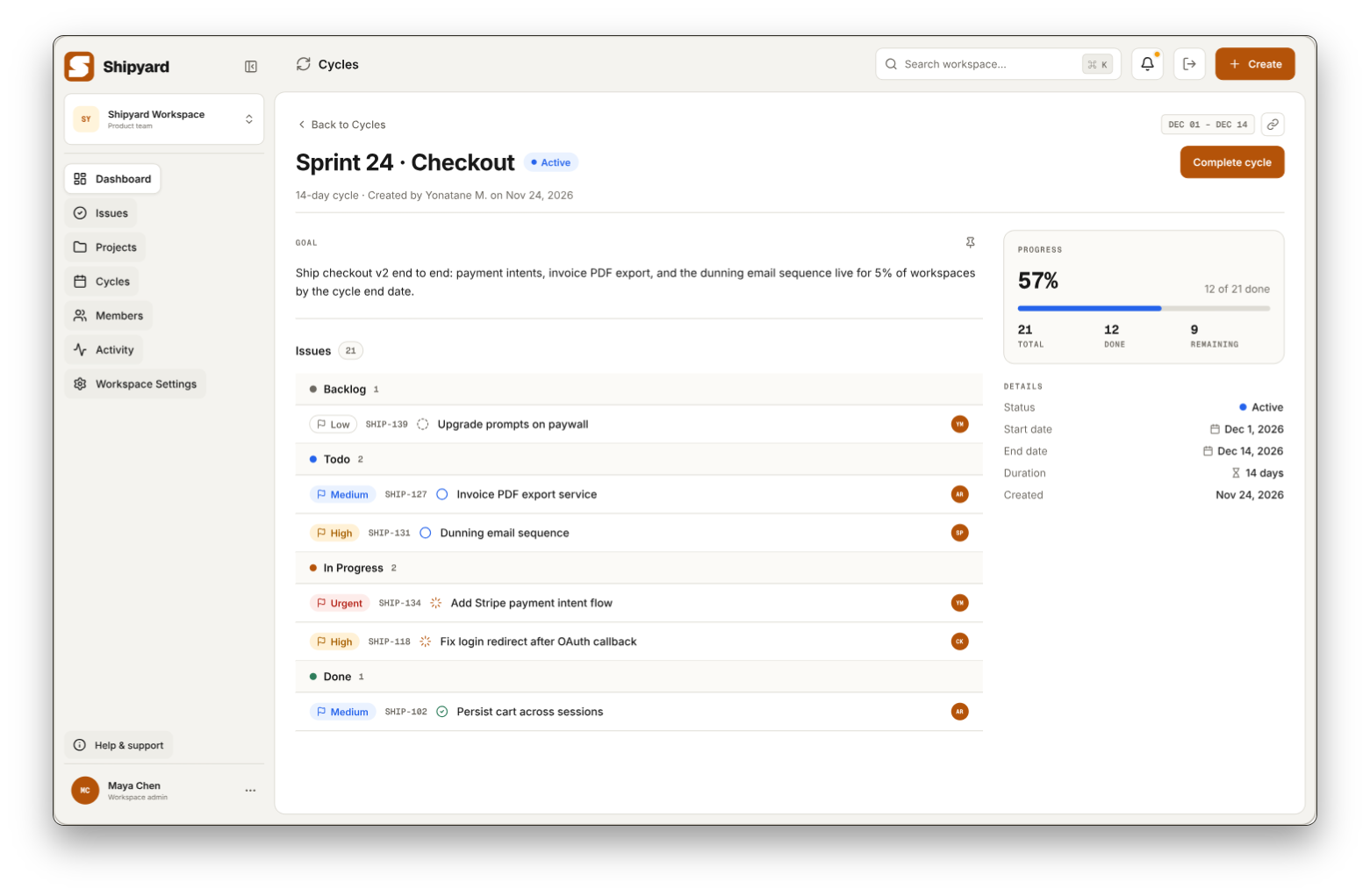
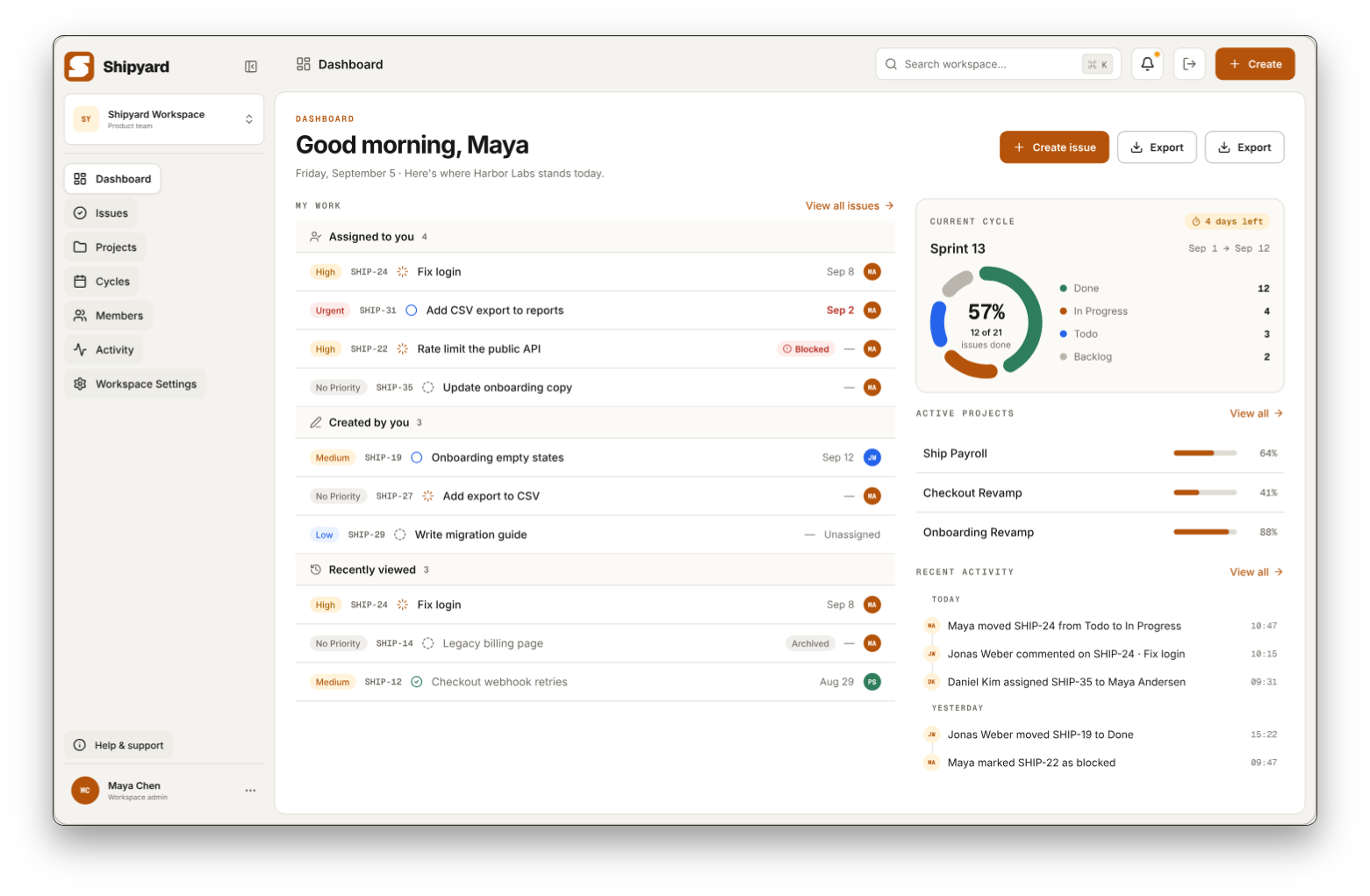
Around that core sit the quiet essentials: a dashboard with the current cycle and assigned work, a workspace-wide activity feed, one ranked search across issues, projects, cycles, members, and comment text, plus threaded comments with @mentions that notify.
Agents work here too
The differentiator: Shipyard treats an AI agent as a second interface to the same domain, not a second backend. A member mints a scoped token under agent access, points their agent at /mcp, and the agent works as them: same services, same permissions, every write attributed in history and the activity feed.
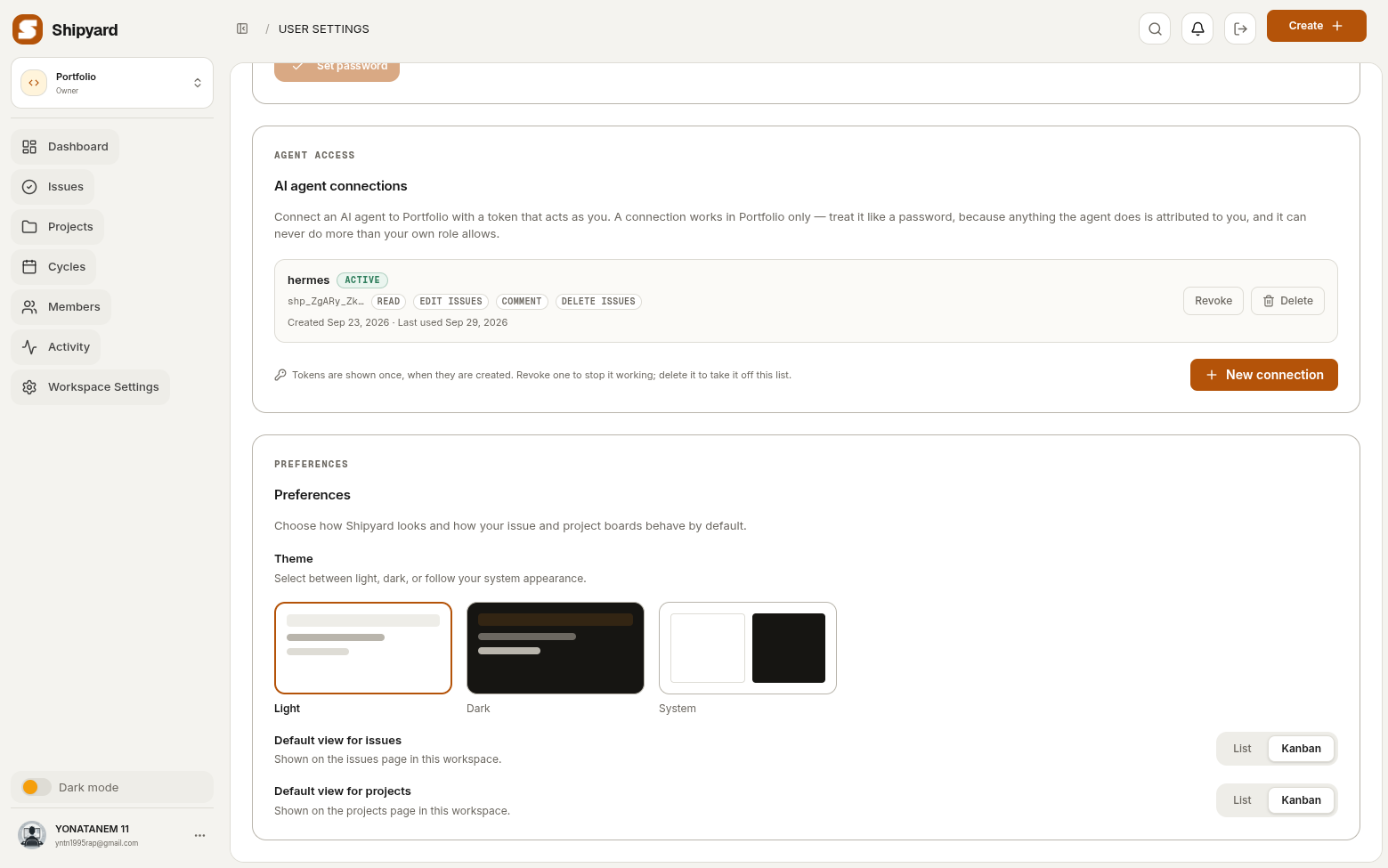
The contracts make this safe to build on. One Zod schema in the shared package is both the request validator and the generator for the MCP tool's JSON Schema, so the two can never drift. Tool discovery is filtered by token scope, reads come before writes, and the irreversible tools sit last.
curl -X POST https://api.shipyard.yonatanem.com/mcp \
  -H "Authorization: Bearer shp_9f2c…" \
  -H "Content-Type: application/json" \
  -d '{"jsonrpc": "2.0", "id": 1, "method": "tools/call",
       "params": {"name": "shipyard_list_issues",
                  "arguments": {"cycle": "current", "blocked": true}}}'
Postgres does the heavy lifting
There is no search engine, no queue, no cache tier. Full-text search runs on weighted tsvector columns with GIN indexes. Cycle date ranges cannot overlap because the database forbids it. An exclusion constraint, not application code:
// Illustrative excerpt; the real invariant lives in schema.prisma
@@exclusion([workspaceId, daterange(startDate, endDate)],
            name: "cycle_no_overlap")
The activity feed is append-only, and its targets are stored as plain strings so rows outlive whatever they point at. Invariants that matter live in the schema, where they cannot be bypassed.
Shipping it
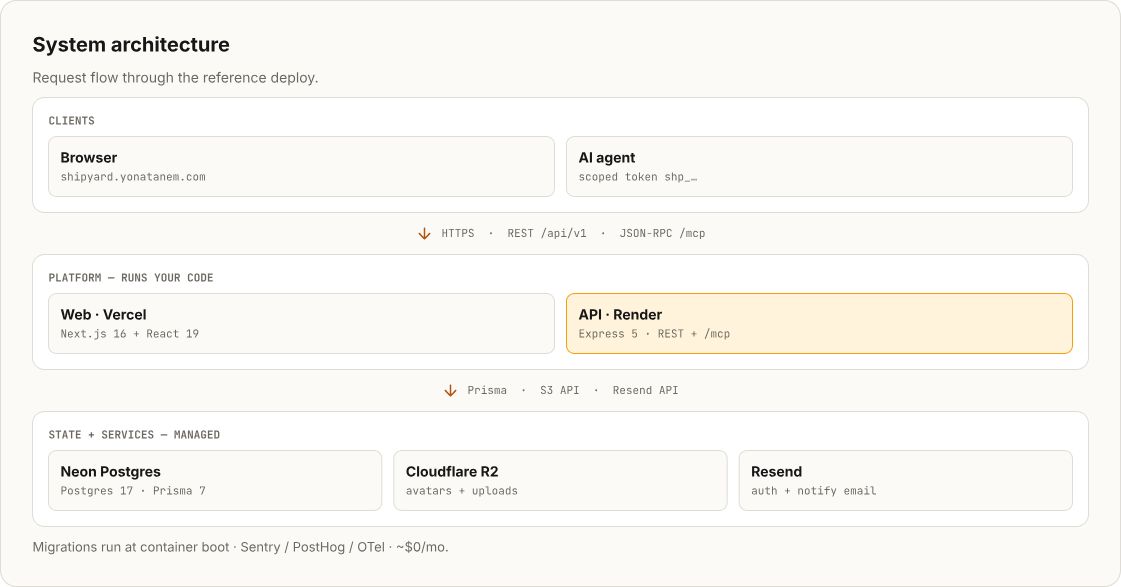
One Turborepo monorepo: a Next.js app on Vercel, an Express modular monolith in Docker on Render, Postgres on Neon, migrations applied at container boot. The reference deploy costs roughly $0 a month, with cold starts accepted deliberately. Every change passes lint, typecheck, format, audit, and build before it merges.
Designed on purpose
Shipyard was planned before it was built. A separate design repository holds the brief, PRD, user flows, ADRs, and per-feature specs: behavior first, slices second. The interface follows the Harbor Amber system: calm operational surfaces, Inter for UI with Geist Mono for IDs and labels, exactly one solid-brand action per section.
Status
Shipyard is live and serving real workspaces. The post-MVP backlog grows only on evidence: user reports, measured pain, or a blocking dependency. Never preemptive building. If you run a small team drowning in process, this is the tool I wish we'd had sooner.